A spacesuit for Earth
Active cooling for people who can't escape the heat
A self-contained, body-worn refrigeration system that
Heat Stress
Global heat stress is rising at an unprecedented rate
Across aviation, infrastructure, construction and mining, people work through heat the human body cannot safely regulate. The tools meant to protect them — rest breaks, ice vests, evaporative and fan cooling — were built for moderate conditions and break down where the workforce now needs them most.
As temperatures climb, the number of unsafe working hours grows every year. Lost productivity, heat illness and hard exposure limits are becoming a structural cost rather than an occasional one.
Sources: International Labour Organization, 2024; IPCC AR6 WG1, 2021; WMO / Copernicus C3S, 2024.
Groundsuit
A high-performance, wearable, personal cooling system
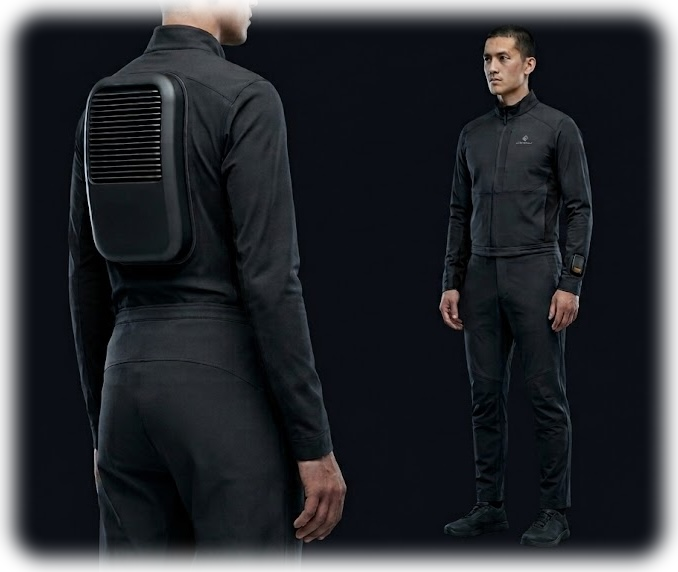
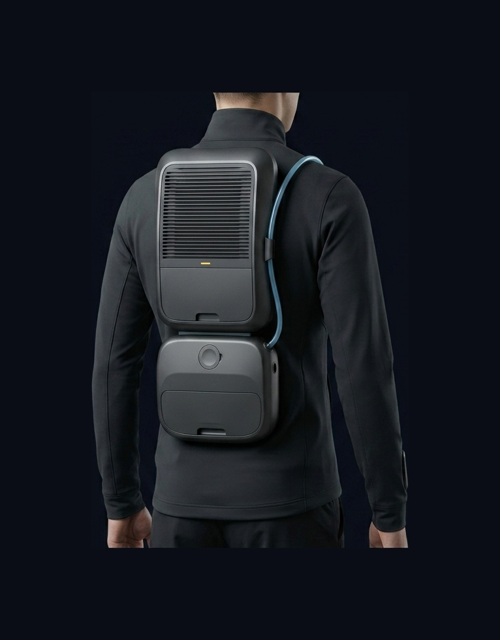
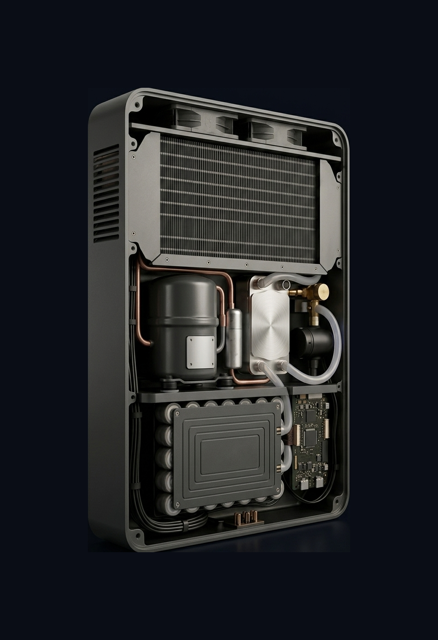
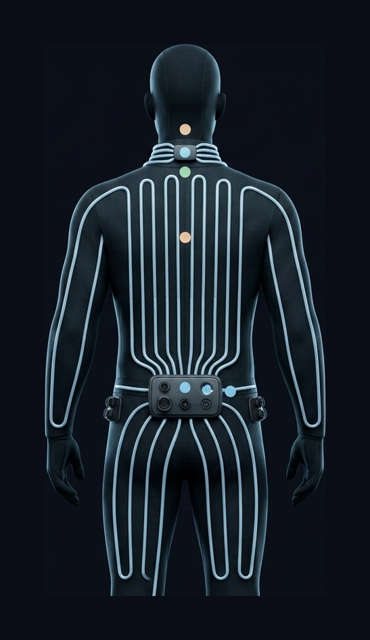
Groundsuit is built around miniaturised vapour-compression refrigeration — the cycle behind a domestic fridge or an air conditioner, engineered down to a body-worn module. A compact unit houses the heat exchanger, compressor, pump, control electronics and battery; chilled fluid circulates through a multi-layer garment, drawing heat away from the body across the working day.
It is self-contained and battery-powered, with hot-swappable packs matched to worker rotation cycles. No tethers, no external chiller, no ice to refreeze. The thermal-control thinking comes from spacesuits, adapted for industrial work on the ground.
Designed to deliver hours of continuous cooling in 45 °C-plus conditions, and grounded in published refrigeration research.
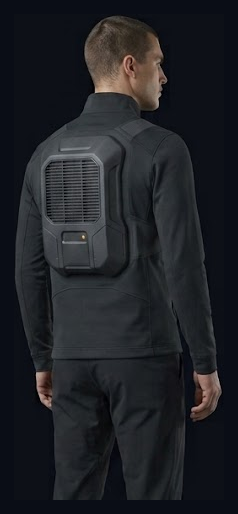
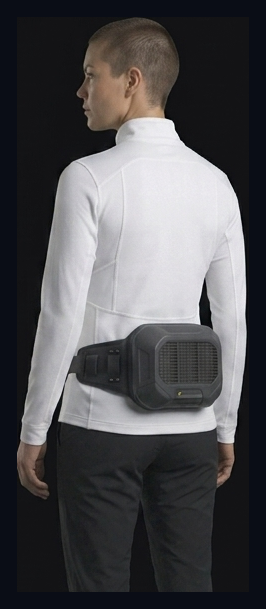
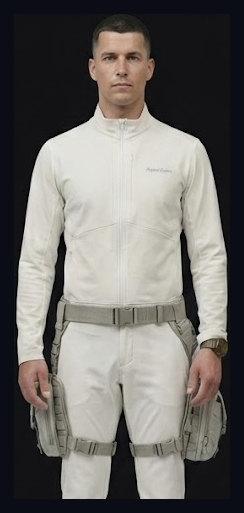
One platform, several form factors. The same cooling module carries on the back, at the hip, or on the legs — and integrates with existing workwear and PPE.
Comparison
Existing wearable solutions fall short in extreme environments
Most "cooling" gear manages comfort, not core temperature. Above roughly 35 °C wet-bulb, other approaches often fail to deliver adequate worker safety.
| Approach | Cooling power | Sustained runtime | Works above 35 °C wet-bulb | Integrated & wearable |
|---|---|---|---|---|
 Groundsuit Groundsuit |
High — active refrigeration | Full shift, hot-swap packs | Yes — by design | Yes — fully integrated |
| Peltier / thermoelectric | Low (comfort-class) | Battery-limited | No | Yes |
| PCM vests | Moderate, fades as it melts | 45–90 min | No | Partial; needs refreezing |
| Pumped ice-water | Moderate, steady while ice lasts | Limited by ice reservoir | No | Partial; bulky reservoir |
| Fans | Low — air movement only | Continuous | No — can't cool below ambient | Yes |
| Evaporative | Low — relies on water evaporating | Continuous while wet | No — fails in humidity | Yes |
| Rest breaks | None — removes the worker | n/a | No work gets done | n/a |
Comparison of cooling approaches, not specific products.
Customers
Built for people who need protection where it's hottest
Groundsuit targets year-round, high-heat operations where exposure is concentrated and the work cannot move indoors.
Aviation ground operations
Ramp, baggage and turnaround crews working on hot tarmac.
Infrastructure maintenance
Utilities, telecoms, rail and wind operations and maintenance.
Construction
Mediterranean, US and Gulf sites under sustained heat.
Mining
Surface operations, supply and logistics; then deep underground heat.
Security & tactical
Base operations, ground support and logistics in high-heat environments.
Consumer & personal health
Heat relief for vulnerable people and hot-city living.
Platform
A connected workforce heat-safety platform
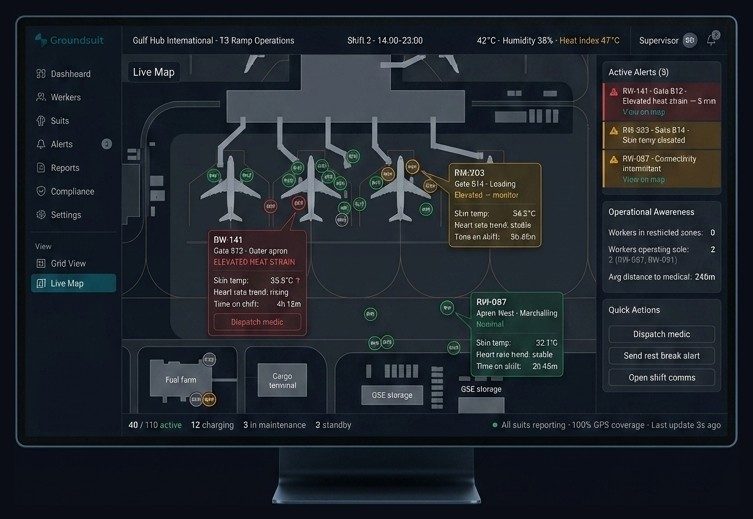
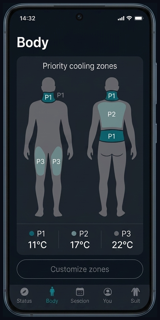
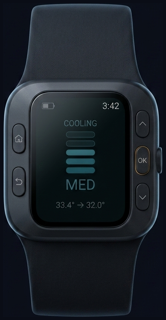
Every module carries GPS, connectivity and sensing — turning individual cooling into fleet-level visibility and ongoing health and activity monitoring.
About
Engineered like spaceflight hardware
Groundsuit is the brainchild of Ben Kott — an aerospace engineer with decades-long experience in technology, energy and sustainability — applying the thermal-control thinking behind spacesuits to keeping people safe in extreme heat environments on the ground.
The company behind Groundsuit is headquartered in the UK. Engineering, assembly, software development and servicing operations are based in Europe. Our cooling solutions and software platform are designed for worldwide deployment.
Early Access
Join the waitlist
Be first to know as Groundsuit moves toward early access. Tell us who you are and we'll keep you posted.